What a recast actually is
A mortgage recast — servicers also call it re-amortization — is one of the simplest transactions in the mortgage world and one of the least advertised. You send your servicer a large principal payment, and they recalculate your required monthly payment based on the new, smaller balance, spread over the same remaining term at the same interest rate. That’s the entire trick. On the calculator’s defaults — $320,000 owed at 6.5% with 25 years to go — a $30,000 lump sum drops the balance to $290,000, the servicer reruns the amortization math over the same 25 years, and the required payment falls from about $2,161 to about $1,958 a month.
Nothing else about the loan changes: same note, same rate, same maturity date, same lender. Because it isn’t a new loan, there’s no credit check, no appraisal, no income verification, no title work, and no closing costs — just a processing fee that typically runs $0 to $500. Compare that to a refinance, which replaces your loan entirely: a full application, thousands of dollars in closing costs, and — crucially — a new rate set by today’s market. Our refinance break-even calculator shows how long a refinance takes to earn back those costs. But if your current rate is already low — say you locked in 3% in 2021 — refinancing to shrink the payment means trading a great rate for a worse one. Recasting is the tool built for exactly that situation: it lowers the payment while leaving the rate untouched.
Is a mortgage recast better than just paying extra?
Here’s the comparison most recast articles skip, and the reason this calculator’s table has three columns instead of two. Once you’ve decided to put a lump sum toward the mortgage, there are two ways to use it:
- Recast: the lump sum lowers the balance, the servicer lowers your required payment, and you ride the smaller payment for the same remaining term. Your payoff date doesn’t move an inch.
- Prepay and keep your old payment: the same lump sum lowers the balance, but you keep sending the payment you were already making. Every month, that unchanged payment overshoots the interest due by a wider margin, so principal melts faster and the loan ends years early.
The recast payment is nothing more exotic than the standard amortization formula rerun on the smaller balance — same monthly rate r, same number of months n remaining:
New payment = (balance − lump sum) × r ÷ (1 − (1 + r)−n)
Here is that formula run against a range of lump sums, all on a $320,000 balance at 6.5% with 25 years remaining and a $250 recast fee. The last two columns are the whole argument — the recast column against the do-nothing baseline, and the same lump sum with your old $2,160.66 payment simply kept:
| Lump sum | New payment | Payment drop | Interest saved — recast | Interest saved — keep old payment |
|---|---|---|---|---|
| $10,000 | $2,093.14 | $67.52/mo | $10,006 | $37,733 |
| $20,000 | $2,025.62 | $135.04/mo | $20,262 | $70,372 |
| $30,000 | $1,958.10 | $202.56/mo | $30,519 | $98,901 |
| $50,000 | $1,823.06 | $337.60/mo | $51,031 | $146,344 |
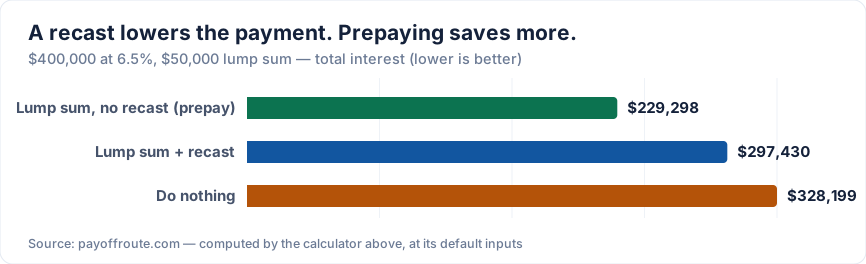
Every row tells the same story: keeping your old payment saves roughly three times what recasting saves. The recast column buys you a smaller bill; the prepay column buys you the interest. They are different products sold by the same $30,000.
On the defaults, recasting saves roughly $30,000 of lifetime interest — real money — and frees up about $200 a month. But the same $30,000 lump with the old payment kept pays the loan off almost five years early and saves close to $99,000 — more than three times as much. That gap is the price of the lower payment: every dollar the recast trims from your monthly bill is a dollar that stays borrowed longer, quietly accruing 6.5% the whole time.
Neither answer is wrong; they solve different problems. Recasting is a cash-flow tool — it permanently lowers the amount you’re obligated to pay, which matters if your budget is tight or your income is variable. Prepaying with the payment held steady is a wealth tool — it wrings the maximum interest savings out of the lump sum. And the two aren’t mutually exclusive: you can recast to lower your required payment as a safety floor, then voluntarily keep paying the old amount. The overage goes straight to principal, you capture nearly all of the prepay column’s savings, and if your income ever dips you can fall back to the lower obligation without asking anyone’s permission. To model ongoing extra payments in detail, use our mortgage payoff calculator.
Who can (and can’t) recast
Recasting is a servicer policy, not a legal right, and eligibility follows the loan type:
- Conventional loans (Fannie Mae and Freddie Mac) — most servicers offer recasting, and this covers the majority of US mortgages.
- FHA, VA, and USDA loans generally cannot be recast. The government-backed programs don’t provide for it, so if you hold one of these your realistic options are refinancing or prepaying while keeping the payment.
- Jumbo loans vary. Banks holding jumbos on their own books set their own rules — many allow recasts (some quite generously, to keep good customers), others prohibit them. Ask.
Beyond loan type, expect a minimum lump sum — commonly $5,000 to $10,000, sometimes expressed as a percentage of the balance — plus a requirement that the loan be current, and occasionally a seasoning period after origination. And one procedural point trips people up constantly: a recast is never automatic. If you simply send $30,000 marked “apply to principal,” the balance drops and the loan will end early, but your required payment stays exactly the same. To get the lower payment you must contact the servicer, formally request the recast, sign their paperwork, and pay the fee — then keep paying the old amount until you have written confirmation of the new one, which typically takes a billing cycle or two.
When recasting shines
Three situations account for most recasts:
- You sold a house and rolled the equity into a new one. The classic case: you buy the new home before the old one sells, take the biggest mortgage you qualify for, then dump the sale proceeds onto the new loan and recast. You end up with the payment you would have had with a large down payment — without the timing gymnastics of a contingent offer. Some lenders market recasting for exactly this move.
- A windfall meets a tight monthly budget. An inheritance, a bonus, a business sale — one-time money is easy to come by in a good year, but the monthly budget is what keeps people up at night. A recast converts one-time cash into permanent monthly relief, at your existing rate, for a $250-ish fee.
- Your rate is too low to refinance away. If you hold a sub-4% mortgage from the 2020–2021 era, any refinance today raises your rate. Recasting is essentially the only lever that lowers your payment while preserving that rate.
The fine print
Four things a recast does not do, all worth knowing before you sign:
- It isn’t free. The fee runs $0–500 depending on the servicer. It’s trivial next to refinance closing costs, but factor it in — this calculator counts it against the recast path’s savings.
- Your rate doesn’t change. That’s the feature when your rate is low. It’s the limitation when your rate is high — a recast does nothing about an 8% rate, and a refinance comparison is worth running.
- Your term doesn’t shorten. The payoff date after a recast is identical to the day before it. If getting out of debt sooner is the goal, a recast alone actually moves you away from it, because the lower payment retires principal more slowly than your old payment would have.
- Escrow is untouched. The payment drop applies only to principal and interest. Property taxes and homeowners insurance ride along unchanged, so if your total bill includes escrow, it falls by less than the headline P&I drop this calculator shows.
Finally, remember the new payment is a new minimum, not a ceiling. Nothing stops you from paying more in any month you can — which is exactly how the “recast-and-keep-overpaying” strategy captures both the safety of a lower obligation and most of the interest savings of prepayment.
Frequently Asked Questions
How long does a mortgage recast take?
Typically four to eight weeks from request to new payment. The servicer has to receive your lump sum, verify the loan qualifies, process the paperwork, and re-amortize — and most apply the new payment starting with the next full billing cycle. Keep paying your old payment amount until you have written confirmation of the new one, or you risk a late mark.
Does recasting hurt my credit score?
No. A recast involves no credit pull, no new account, and no change to the loan on your credit report — it is the same loan with a recalculated payment. Your payment history continues uninterrupted. This is one of the quiet advantages over refinancing, which adds a hard inquiry and closes your old account.
Can I recast more than once?
Usually, yes. Most servicers that offer recasting allow repeat recasts, each with its own minimum lump sum and its own fee. Some limit you to one per year or a set number over the life of the loan. If you expect several windfalls — annual bonuses, staged stock vesting — ask your servicer about their limits before planning around multiple recasts.
At what rate difference should I refinance instead of recasting?
A rough rule: if current market rates are at least 0.75 to 1 percentage point below your rate, run the refinance numbers — the rate savings can dwarf what a recast delivers, even after 2–6% of the balance in closing costs. If your rate is at or below today’s market, refinancing to cut the payment means accepting a worse rate, and recasting is almost always the better tool.
Is the recast fee negotiable?
Sometimes. Fees run from $0 to about $500 and are set by servicer policy, not law. Some lenders waive the fee outright, and others will if you ask — particularly for a large lump sum or a long-standing customer. It costs nothing to request a waiver before you pay, and even the full fee is trivial next to refinance closing costs.
Do adjustable-rate mortgages recast differently?
Yes, in your favor. Most ARM notes automatically re-amortize the balance at every scheduled rate adjustment. That means a lump-sum principal payment made before an adjustment date lowers your payment at that adjustment without a formal recast or fee — the recalculation is built into how the loan works. Check your note for the adjustment mechanics.
Does this calculator store my information?
No. All calculations run entirely in your browser. Nothing you type is saved, stored, or sent to any server.
Read more on this
Related calculators
Home Equity Loan
See how much you can borrow against your home and what the monthly payment would be, with a full amortization schedule.
Open calculator →HELOC Payment
Estimate your HELOC payments during the interest-only draw period and the repayment period that follows.
Open calculator →HELOC vs HEL
Same equity, two very different loans. Compare payments and lifetime cost side by side — including what happens to the HELOC if rates rise.
Open calculator →Disclaimer: This calculator is for educational purposes only and provides estimates based on the numbers you enter. It is not financial, legal, or tax advice. Actual loan terms, rates, and payments depend on your lender and personal circumstances. All calculations run in your browser — nothing you enter is stored or sent anywhere.